
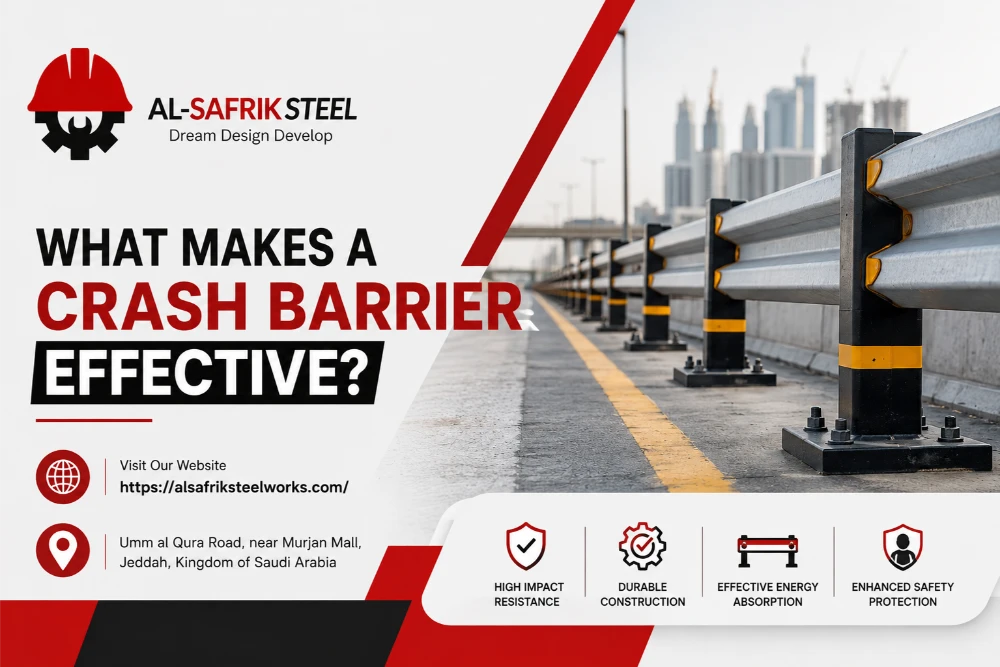
Road accidents remain a serious concern across Saudi Arabia, from busy city streets in Riyadh to fast-moving highways connecting Jeddah and Dammam. A well-designed crash barrier can separate a minor incident from a catastrophic one. It absorbs impact, redirects vehicles, and protects drivers, workers, and pedestrians. But not every barrier performs the same way under pressure.
Why Road Safety Barriers Matter in Saudi Arabia?
The country’s road network spans desert highways, urban corridors, and industrial zones with heavy vehicle traffic. Each environment brings its own risks. High-speed collisions on the Riyadh-Dammam highway differ greatly from low-speed impacts in a Jeddah parking facility. That’s why road safety barriers are engineered to specific standards rather than built as one-size-fits-all products.
Effective barriers do more than block a vehicle. They:
- Reduce the severity of collisions by absorbing kinetic energy
- Prevent vehicles from crossing into oncoming traffic
- Protect pedestrians, workers, and roadside structures
- Guide traffic through construction zones and detours
- Support the Kingdom’s broader road safety and Vision 2030 targets
Without properly rated barriers, even a low-speed impact can result in serious injury or costly property damage. This makes barrier selection a safety decision, not just a construction detail. The Kingdom’s ongoing infrastructure growth has also raised expectations for what a barrier system should deliver. New expressways, industrial corridors, and smart city projects all require vehicle restraint systems that meet international benchmarks while withstanding local conditions such as extreme heat, dust, and heavy freight traffic.
A barrier on a coastal route near Dammam faces different stresses than one on a desert highway outside Riyadh, so engineers assess climate and traffic patterns before recommending a system. Treating barrier selection as an afterthought, rather than a planned safety measure, is one of the most common and costly mistakes on any road or facility project.
Core Types of Crash Barriers
Choosing the right barrier starts with understanding the main categories available. Each type suits different locations, traffic volumes, and risk levels.
1. Steel guardrail systems:
They are the most common choice for highways and rural roads. They flex on impact, absorbing energy while keeping the vehicle upright and in a controlled path.
2. Steel crash barriers:
These types of barriers are valued for their strength, corrosion resistance, and ability to withstand harsh outdoor conditions.
3. Concrete Jersey barriers:
Work well for median separation and construction zones. Their solid mass resists displacement, making them useful where space is limited and a rigid boundary is needed.
4. Crash-rated barriers:
These bollards and wedge barriers are designed for high-security applications such as government buildings, oil and gas facilities, and critical infrastructure. They are tested against international standards to stop vehicles of specific weight and speed.
5. HVM barriers:
Hostile Vehicle Mitigation goes a step further, offering certified protection against deliberate ramming attempts. They are common at embassies, airports, and high-risk commercial sites across the Kingdom.
Each type has a role; a highway needs flexible guardrails, and a secure facility needs crash-rated bollards. A construction zone needs mobile concrete barriers. Matching the barrier to the setting is the first step toward real effectiveness.
Factors That Determine Barrier Effectiveness
A barrier is only as good as its design and installation. Several factors decide whether a barrier performs when it matters most.
- Material strength: The steel or concrete used must meet recognized engineering standards to withstand repeated stress without cracking or failing.
- Crash rating and certification: Barriers tested to standards such as ASTM or MASH provide a documented guarantee of performance at a given vehicle weight and speed.
- Energy absorption: A good barrier does not just stop a vehicle. It manages the force gradually, reducing the shock transferred to occupants and nearby structures.
- Foundation depth: A barrier is only as stable as what holds it in place. Shallow or poorly compacted foundations increase the risk of barrier failure on impact.
- Height and length: Barriers must be tall and long enough to contain the vehicles using the road, from passenger cars to heavy trucks.
- Terrain and site conditions: Sandy or shifting ground common in parts of Saudi Arabia requires foundation adjustments that a barrier supplier should account for during design.
When these factors align, a crash barrier performs as intended. When you overlook even one, the entire system can underperform, no matter how strong the material looks on paper.
Steel vs Concrete: Which Performs Better?
This is one of the most common questions facility managers and contractors ask. The honest answer depends on your application.
Steel crash barriers:
Used to flex and redirect vehicles, which reduces the sudden stop that can injure occupants. They are lighter, easier to install, and simpler to repair after minor impacts. Steel also holds up well against the heat and humidity found across Saudi coastal cities like Jeddah and Dammam, provided it carries the right protective coating.
Concrete barriers:
They offer superior mass and are harder to displace, which makes them ideal for median dividers and permanent security perimeters. They require less ongoing maintenance but are costlier to relocate or repair once damaged.
For most highway and industrial applications, steel guardrail systems strike the best balance between flexibility, cost, and repairability. For permanent, high-security boundaries, concrete or hybrid crash-rated systems are often the stronger choice.
Installation Best Practices for Long-Term Performance
Even the best-engineered barrier will underperform if installed incorrectly. Traffic barrier installation should always follow a few core principles.
- Confirm ground conditions before setting the foundation, especially in areas with loose or sandy soil.
- Position posts at the manufacturer’s specified spacing, since wider gaps reduce impact resistance
- Align barrier height with the vehicle types expected on that route or site
- Leave adequate deflection distance behind flexible barriers so they have room to absorb impact
- Inspect welds, bolts, and connection points before the barrier goes into service
Working with an experienced crash barrier supplier in Saudi Arabia ensures these steps are followed correctly from the first survey to final inspection.
Maintenance and Long-Term Barrier Performance
A crash barrier is not an install-and-forget product. Regular inspection keeps it ready to perform when needed.
- Check for corrosion, especially in coastal or high-humidity locations
- Inspect for loose bolts, cracked welds, or shifted foundations after any collision, even minor ones
- Replace damaged sections promptly rather than leaving compromised barriers in place
- Repaint or recoat steel surfaces periodically to prevent rust from weakening structural integrity
- Keep reflective markings visible for night-time driving safety
Barriers exposed to Saudi Arabia’s intense heat and occasional sandstorms need more frequent visual checks than those in milder climates. A proactive maintenance schedule extends the barrier’s working life and keeps it performing at its rated capacity. Facility managers who schedule routine audits, rather than waiting for visible damage, typically spend far less on emergency repairs and avoid the safety gaps that come from a barrier quietly losing strength over time.
Choosing the Right Crash Barrier Supplier
A barrier’s effectiveness depends heavily on who designs, manufactures, and installs it. A reliable supplier should offer certified products, engineering support, and a track record across similar projects.
Al Safrik Steel manufactures industrial safety barriers and highway crash barriers built for the demands of the Saudi and UAE markets. From steel guardrails for highway projects to crash-rated bollards for secure facilities, the company works with contractors and government agencies across Riyadh, Jeddah, and Dammam to deliver barrier systems that meet recognized safety standards. Choosing a supplier with proven manufacturing capability, rather than a generic import, gives you confidence that the barrier will perform exactly as specified when it matters most.
Common Mistakes to Avoid When Selecting a Crash Barrier
Many project delays and safety failures trace back to avoidable planning-stage errors. Knowing these mistakes helps you make a more informed decision.
- Choosing barriers based on price alone: The cheapest option often lacks the crash rating or material quality needed for the intended location, which can lead to costly replacements later.
- Ignoring local site conditions: Sandy or unstable soil common across parts of Saudi Arabia requires foundation adjustments that generic barrier designs may not account for.
- Overlooking vehicle speed and weight data: A barrier rated for passenger cars will not perform the same way against heavy trucks common on industrial routes.
- Skipping professional installation: Even a well-rated barrier can fail if posts are spaced incorrectly or foundations are poured too shallow.
- Delaying repairs after minor impacts: A barrier that looks intact after a small collision may have internal stress fractures that compromise its performance in the next impact.
Avoiding these pitfalls comes down to working with a supplier who understands both the engineering standards and the specific demands of Saudi road and facility environments.
Final Thoughts
An effective crash barrier results from the right material, the right design, and proper installation working together. Whether you need flexible steel guardrails for a highway, concrete dividers for a construction zone, or crash-rated bollards for a secure facility, the goal remains the same: protect lives and reduce impact severity. Partnering with an experienced manufacturer like Al Safrik Steel ensures your barrier system performs under real-world conditions across Saudi Arabia.
Frequently Asked Questions
What is the main purpose of a crash barrier?
A crash barrier absorbs and redirects impact energy to prevent vehicles from crossing into hazardous areas, protecting drivers, pedestrians, and roadside structures.
Which type of barrier is best for highways?
Steel guardrail systems are generally preferred for highways because they flex on impact and keep vehicles controlled without causing a sudden stop.
How often should crash barriers be inspected?
Inspect barriers at least twice a year, with additional checks after any collision or extreme weather event.
Are concrete barriers stronger than steel barriers?
Concrete barriers offer more mass and rigidity, while steel barriers absorb energy through flexing. The better choice depends on the specific application and location.
Why does foundation depth matter for barrier performance?
A shallow or weak foundation can shift or fail during impact, reducing the barrier’s ability to contain the vehicle as designed.

Recent Comments