
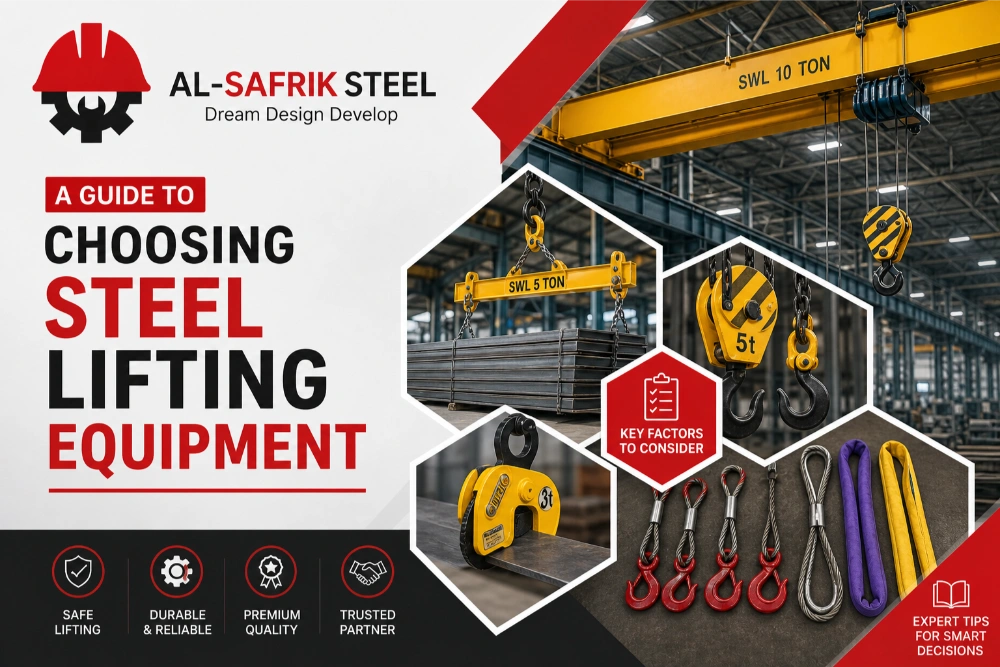
In construction, manufacturing, and logistics, the ability to move heavy materials safely and efficiently is fundamental to success. The right lifting equipment is not just a tool; it’s the backbone of your operation, ensuring productivity while protecting your most valuable asset, your people. Choosing the correct steel lifting equipment involves more than just picking a crane or a hoist. It requires a deep understanding of your project’s needs, the working environment, and the equipment’s specific properties.
Al Safrik Steel offers steel-fabricated products to support your business’s work requirements. From steel trolley to forklift hook attachments, we deliver high-quality products nationwide. In this guide, we will walk you through the essential factors to consider, helping you make an informed decision that enhances safety, boosts efficiency, and provides long-term value for your operations.
Understanding the Core Components of Lifting Operations
Before diving into the selection process, it’s crucial to understand the fundamental types of steel lifting equipment available. These tools are engineered for specific tasks, and knowing their purpose is the first step toward choosing the right one.
The primary categories include:
- Cranes
- Hoists
- Slings and various rigging hardware
Each component plays a distinct role in the lifting process, from providing the power to elevate a load to securely connecting it. Making the wrong choice can lead to operational delays, equipment damage, or, most critically, safety hazards. Therefore, a clear grasp of what each piece of equipment does is essential for building a safe and effective lifting system.
Cranes: The Powerhouses of Lifting
In Saudi Arabia, the need for giant cranes is evident in the operation of massive construction projects. They are the most recognizable form of lifting equipment, designed to move extremely heavy loads both vertically and horizontally. There are different types of cranes, each suited for various environments and capacities. Some of them include:
- Tower cranes dominate urban construction sites, reaching heights of up to 1,000 feet to build skyscrapers.
- Mobile cranes, on the other hand, offer versatility and can be driven to various locations, making them ideal for a range of projects.
- Overhead cranes, often found in factories and warehouses, run on elevated rails to move materials along a fixed path.
Selecting the right crane involves analyzing the maximum weight to be lifted, the height and distance the load needs to travel, and the physical constraints of your worksite.
Key Factors in Selecting Steel Lifting Equipment
Choosing the right steel lifting equipment requires a systematic approach. A hasty decision can result in acquiring machinery that is either inadequate for the job or excessively costly and underutilized. To make a sound investment, you must carefully evaluate several critical factors. By methodically working through these considerations, you can narrow down your options and select machinery that perfectly aligns with your operational requirements, ensuring both safety and cost-effectiveness.
1. Load Capacity and Specifications:
The first and most important factor is the load itself. You must know the maximum weight you intend to lift. Always select equipment with a Working Load Limit (WLL) that comfortably exceeds your heaviest anticipated load. This provides a crucial safety margin. Beyond weight, consider the load’s dimensions, shape, and center of gravity. An irregularly shaped object with an off-center point of gravity will require a more complex rigging setup and potentially a different type of lifting equipment than a uniform, stable load. Documenting these characteristics will help you define the minimum capacity and specific features your equipment must have.
2. The Working Environment:
It is essential to consider the work environment where the lifting equipment will be used. For indoor applications like a workshop or warehouse, an overhead or gantry crane might be the most efficient solution. For outdoor construction sites with rough terrain, a mobile or crawler crane would be more appropriate. You must also consider environmental conditions. Will the equipment be exposed to corrosive substances, extreme temperatures, or explosive atmospheres? In such cases, you will need equipment made from specialized materials or with protective features, such as galvanized steel components or explosion-proof motors. Reputable suppliers, such as Al Safrik Steel, can provide insights into materials that withstand the demanding climate in Saudi Arabia.
3. Frequency of Use (Duty Cycle):
Some equipment designed for infrequent, light-duty use will not withstand the demands of continuous, 24/7 operation. Manufacturers classify equipment by intended duty cycle, ranging from light service to severe and constant service. Selecting a crane with a light-duty classification for a heavy-duty production line will lead to premature wear, frequent breakdowns, and increased safety risks. Be realistic about your operational tempo and choose equipment rated for that level of use to ensure reliability and longevity.
4. Safety and Compliance Standards:
The security of workers on the site is non-negotiable, especially during lifting operations. Your chosen equipment must comply with all relevant national and international safety standards, such as those set by OSHA, ASME, and ISO. In Saudi Arabia, adherence to local regulations is also mandatory. Ensure the equipment is appropriately certified, has clear documentation of its load testing, and includes a comprehensive user manual. Features like overload protection systems, emergency stop buttons, and limit switches are not optional luxuries. They are essential components for preventing accidents. Investing in compliant, feature-rich equipment protects your workers and your business from liability.
5. Maintenance and Serviceability:
All machinery requires maintenance to function safely and effectively. Before purchasing, consider the long-term serviceability of the lifting equipment. Are spare parts readily available? Is there local technical support for servicing and repairs? Choosing a well-known brand from a reputable supplier often ensures better access to parts and skilled technicians. Complex, custom-built machinery might perform a specific task perfectly, but could become a liability if parts are difficult to source or require specialized overseas support.
A reliable steel fabricator partner like Al Safrik Steel can help ensure that the equipment you choose is backed by strong after-sales support and a steady supply of spare parts.
The Long-Term Value of Quality Steel
When selecting lifting equipment, the quality of the steel used in its construction is a primary determinant of its durability, reliability, and safety. High-grade steel provides superior strength, resistance to fatigue, and the ability to withstand harsh environmental conditions. While lower-quality equipment may have a lower initial price tag, it often leads to higher long-term costs due to frequent repairs, downtime, and a shorter operational lifespan.
Investing in equipment made from high-quality steel means you are investing in peace of mind. It ensures the structural integrity of cranes, the strength of hoist chains, and the reliability of rigging components. This focus on material quality reduces the risk of catastrophic failures, protects your workforce, and ensures your operations continue without interruption. Over the equipment’s lifetime, the initial investment in quality steel pays for itself through enhanced safety, lower maintenance costs, and greater productivity.
FAQs
How often should I inspect my lifting equipment?
Inspection frequency depends on the type of equipment, its usage, and regulatory requirements. Generally, the operator should conduct a daily pre-use visual inspection. Critical components and equipment used in severe conditions require more frequent detailed inspections.
What factors should be considered when choosing steel lifting equipment?
Key factors include load capacity, load type, lifting environment, frequency of use, and compliance with safety standards. Selecting equipment that matches the load’s weight and shape is essential to ensure safe, efficient lifting operations.
How do I determine the correct load capacity for a lifting crane?
The load capacity should always exceed the maximum weight you plan to lift, including any additional force from movement or imbalance. It’s recommended to choose equipment with a safety margin to reduce the risk of overload and equipment failure.
Why is certification necessary for steel lifting equipment?
Certified equipment meets recognized safety and quality standards, ensuring reliability and performance under load. Using uncertified or substandard equipment can lead to accidents, legal issues, and costly downtime.
Conclusion
Choosing the right steel lifting equipment is a critical decision that directly impacts workplace safety, operational efficiency, and long-term cost savings. By understanding load requirements, selecting appropriate, certified equipment, and conducting regular inspections, businesses can minimize risks and improve productivity. A well-informed approach ensures that lifting operations are not only practical but also compliant with safety standards, protecting both workers and assets over time. Al Safrik Steel will help you choose the right equipment for your work.

Recent Comments