
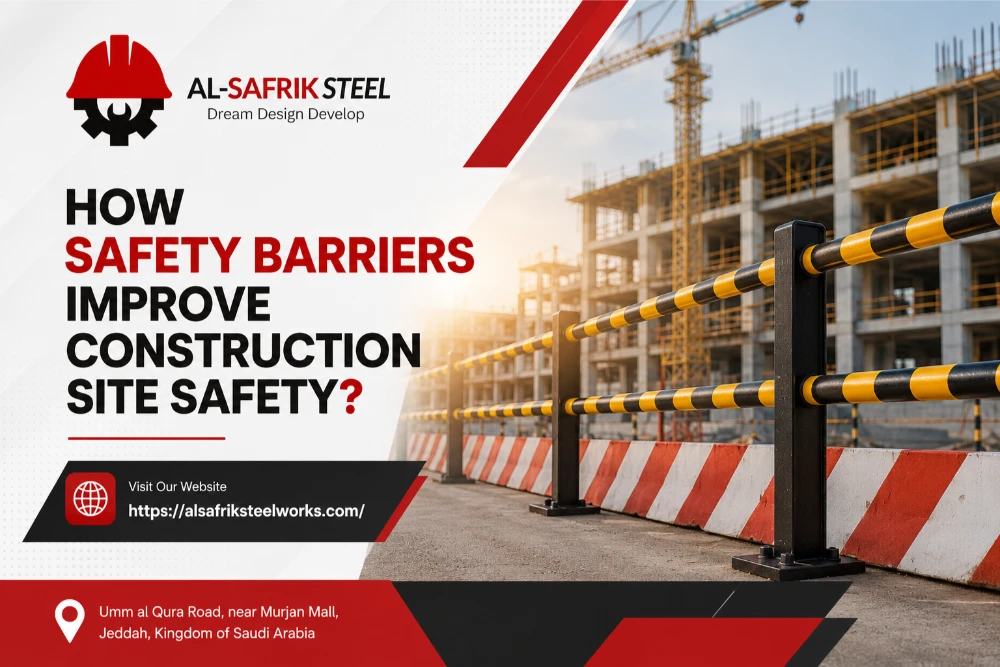
Construction sites in Saudi Arabia are busier than ever. From Riyadh’s growing skyline to the giant projects taking shape in NEOM, Jeddah, and Dammam, the Kingdom’s construction boom under Vision 2030 has brought thousands of new job sites to life. But with rapid growth comes greater risk. Heavy machinery, moving vehicles, open excavations, and constant foot traffic make construction site safety a top priority for every contractor and project manager. One of the simplest yet most effective ways to protect workers and the public is to use safety barriers. We will explain why construction safety barricades matter, the types available, and how a trusted supplier like Al Safrik Steel helps businesses across the Kingdom build safer sites.
Why Construction Site Safety Cannot Be Ignored?
Construction remains one of the most hazardous industries in the world, and Saudi Arabia is no exception. Falls, vehicle collisions, falling debris, and unauthorized site access account for a large share of workplace accidents every year. Poor site management not only endangers lives but also leads to costly delays, legal penalties, and damaged reputations for construction firms.
It is where site safety barriers come into play. They act as the first line of defence, physically separating hazardous zones from workers, pedestrians, and vehicles. A well-planned barrier system dramatically reduces the risk of accidents while keeping projects compliant with local labour and safety regulations enforced by Saudi authorities. Whether the project is a residential tower in Khobar or an industrial plant in Yanbu, security barricades are no longer optional; they are a fundamental requirement of responsible construction management.
What Are Safety Barriers and Why Do They Matter?
These barricades are physical structures, usually made of steel, plastic, or concrete, designed to control movement, mark boundaries, and protect people from hazards on active work sites. They come in many shapes and sizes depending on the job. However, their core purpose remains the same: preventing accidents before they happen.
On a typical Saudi construction site, barricades serve several important functions:
- Blocking unauthorized entry into hazardous zones
- Separating pedestrian walkways from heavy vehicle routes
- Marking excavation sites, trenches, and open pits
- Protecting workers from falling objects or debris
- Guiding traffic around active work areas
Without these boundaries, even a well-trained workforce is exposed to unnecessary risks. Steel safety barriers, in particular, are valued for their strength and durability, especially in Saudi Arabia’s harsh climate, where equipment must withstand extreme heat, sand, and heavy daily use. Companies like Al Safrik Steel manufacture barricades engineered specifically to endure these local conditions.
Types of Safety Barriers Used on Construction Sites
Not every construction site has the same requirements, which is why safety barricades come in different designs. Understanding these types helps site managers choose the right solution for their specific needs.
Temporary Fencing Barriers:
These are widely used to enclose an entire site perimeter, keeping unauthorized visitors and stray animals away from active work zones. Temporary fencing is common on residential and commercial projects across Jeddah, Riyadh, and Makkah.
Steel Pedestrian Barricades:
Designed to guide foot traffic safely around a site, pedestrian safety blockades are often placed near entry points, walkways, and areas where the public may pass close to construction activity.
Vehicle Safety Barriers:
Heavy vehicles and cranes present serious risks. Vehicle safety barricades, including crash blocks and bollards, prevent vehicles from entering restricted zones or colliding with workers and equipment.
Crowd Control Blockades:
Used mostly during public events near construction zones or in busy urban areas, crowd control barriers manage large groups of people and keep them at a safe distance from active work.
Excavation and Trench Barricades:
Open trenches and excavation pits are among the leading causes of construction site falls. Barricades placed around these areas warn workers and prevent accidental entry.
Anti-Vortex and Specialized Steel Barriers:
For industrial and oil sector projects, more specialized barricades such as anti-vortex plates and heavy-duty steel guards are used to protect equipment and personnel from operational hazards.
How Do Safety Barriers Reduce Workplace Accidents?
The connection between safety barricades and reduced accident rates is well documented across the construction industry. When these blockades are installed correctly, they create a controlled environment where risks are visible and manageable.
Here is how they directly improve safety outcomes:
- Preventing falls: Barriers around elevated platforms, scaffolding, and trenches stop workers from accidentally stepping into danger zones.
- Reducing vehicle-related injuries: Clear separation between vehicle paths and worker zones lowers the risk of collisions.
- Controlling site access: Only authorized and trained personnel may enter hazardous areas, reducing exposure for untrained visitors.
- Improving visibility: Bright, reflective barricades make hazardous zones easy to spot, even in low light or dusty conditions common in Saudi Arabia.
- Supporting emergency response: Clearly marked pathways help emergency teams reach an incident quickly without obstruction.
Statistics from occupational safety studies consistently show that sites with proper barrier systems experience fewer lost-time injuries compared to sites without adequate boundary controls. This makes barricades not just a safety measure, but a smart business investment that reduces downtime, insurance claims, and legal liability.
Choosing the Right Safety Barrier Supplier in Saudi Arabia
Selecting a reliable supplier is just as important as choosing the right barrier type. Poor-quality barricades can bend, rust, or fail under pressure, defeating their entire purpose. This is why many contractors across the Kingdom trust established manufacturers with proven experience in local conditions.
When searching for the best safety barriers for construction sites in Saudi Arabia, project managers should consider the following factors:
- Material quality: Galvanized steel resists rust and performs well in humid coastal cities like Jeddah and Dammam.
- Customization options: Every site has unique dimensions and hazards, so barricades should be adaptable to specific project needs.
- Compliance with safety standards: Reliable suppliers manufacture barricades that meet recognized international and regional safety codes.
- Durability in extreme weather: Saudi Arabia’s heat and sandstorms demand equipment built to last.
- After-sales support: A good supplier offers guidance on installation, maintenance, and replacement.
Al Safrik Steel, based in Jeddah with delivery capabilities across Riyadh, Khobar, Makkah, Medina, and other regions of the Kingdom, has built a strong reputation for manufacturing durable, customized steel safety products. Their fabrication expertise, combined with a focus on quality control, makes them a dependable choice for contractors who cannot afford to compromise on site safety. (Approx. 190 words)
Best Practices for Installing and Maintaining Safety Barriers
Buying quality barricades is only half the job. Proper installation and ongoing maintenance are equally important to keep them functioning as intended throughout a project’s lifecycle.
Some practical tips for site managers include:
- Conduct a site risk assessment before deciding on barrier placement.
- Install them at all major hazard points, including trenches, scaffolding, and vehicle routes.
- Use high-visibility colours and reflective strips, especially during night shifts or in low-light areas.
- Inspect them regularly for damage, rust, or instability, and repair or replace them immediately.
- Train workers on the purpose of each barrier so they understand and respect the boundaries.
- Reposition barriers as the project progresses and hazard zones shift.
Routine maintenance is particularly important in Saudi Arabia’s climate, where sand, dust, and intense sunlight can wear down materials faster than in milder environments. A proactive maintenance schedule prevents small issues from turning into safety failures later in the project. (Approx. 155 words)
The Growing Demand for Safety Barriers Amid Saudi Arabia’s Construction Boom
Saudi Arabia’s construction sector is expanding at an extraordinary pace, driven by megaprojects such as NEOM, the Red Sea Project, and Qiddiya, along with steady growth in residential and commercial development across cities including Riyadh, Jeddah, and Dammam. This surge has increased demand for reliable construction safety equipment, including fencing and crowd control systems.
As more international contractors enter the Saudi market, safety expectations are rising to match global standards. Local manufacturers such as Al Safrik Steel are well positioned to meet this demand, offering products designed specifically for the region’s climate and regulatory environment. This growing focus on safety is not just about compliance; it reflects a broader shift toward protecting the workforce that is building the Kingdom’s future.
Final Thoughts
Safety barriers may seem like a small part of a much larger construction project. However, their impact on worker protection, site organization, and overall project success is significant. From temporary fencing to specialized steel guards, the right combination of barricades can dramatically reduce accidents and keep projects running smoothly. As Saudi Arabia continues its rapid construction growth, investing in high-quality security blockades from trusted manufacturers like Al Safrik Steel is a decision that protects both people and businesses. Contractors who prioritize proper barrier systems today are building not just structures, but a stronger culture of safety for the entire industry.
FAQs
What are safety barriers used for?
These are used to protect people, equipment, and property by preventing accidents and controlling access to hazardous areas.
Where are safety barriers commonly installed?
They are commonly installed in warehouses, factories, construction sites, parking areas, roads, and industrial facilities.
What materials are safety barricades made from?
Safety barricades are typically made from steel, concrete, plastic, or reinforced polymers, depending on the application.
How do security barricades improve workplace safety?
They reduce the risk of collisions, separate pedestrian and vehicle traffic, and help meet workplace safety standards.
How do I choose the right safety barricades for my facility?
The choice should be based on your site’s traffic levels, impact requirements, environment, and specific safety regulations.

Recent Comments