
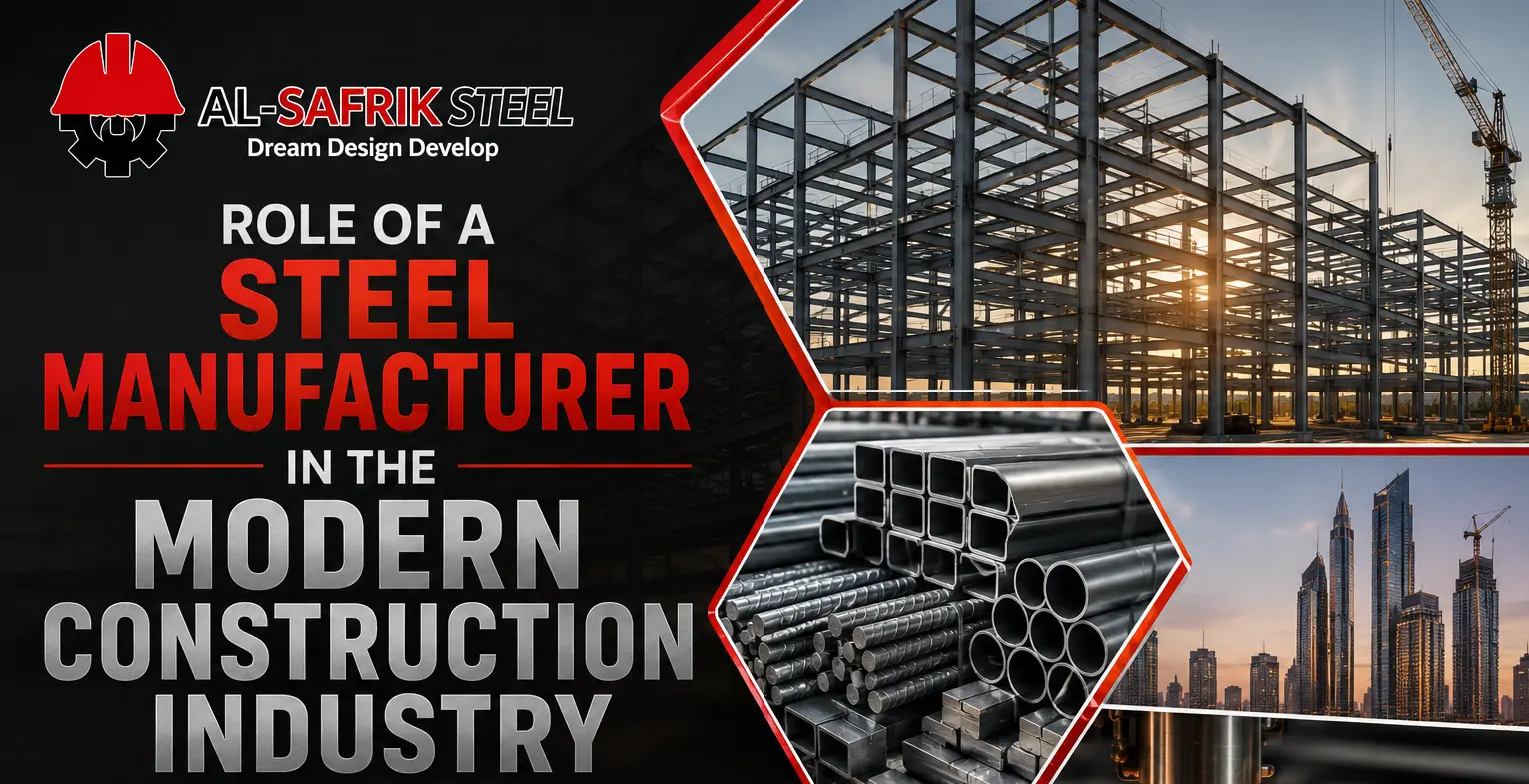
From towering skyscrapers and industrial plants to bridges, airports, and residential buildings, steel has become the backbone of contemporary infrastructure. Behind every strong beam, durable frame, and reliable structure stands a steel manufacturer that ensures quality, safety, and innovation at every step.
In today’s fast-evolving land of Saudi Arabia, the importance of a Steel Fabricator goes far beyond producing raw materials. Manufacturers are now development partners, offering technical expertise, customized solutions, and sustainable practices that shape how cities grow and industries expand.
The importance Of Steel in Modern Construction
Steel is one of the most widely used construction materials in the world, and for good reason. Its unique combination of strength, flexibility, and durability makes it ideal for a wide range of applications. Steel has become a first choice for engineers and architects because it offers several unmatched advantages:
- High strength-to-weight ratio
- Long lifespan with minimal maintenance
- Resistance to fire, pests, and harsh weather
- Flexibility in design and fabrication
- Recyclability and sustainability
These characteristics allow construction projects to achieve safety, speed, and cost efficiency without compromising on structural integrity. Traditionally, a steel manufacturer focused primarily on producing standard steel sections and supplying them to contractors. Today, that role has evolved significantly. Modern steel producers actively collaborate with architects, engineers, and developers. They participate in early design stages to ensure that steel components meet structural requirements, design intent, and regulatory standards. This shift from supplier to strategic partner helps reduce project delays, material wastage, and unexpected costs.
The Role Of Steel Manufacturers
They work professionally with companies and provide them with customized fabricated products in different quantities. The steel fabricators understand their responsibilities and assist in the following ways:
1. Contribution to Structural Strength and Safety:
One of the most critical responsibilities of a steel fabricator is ensuring that all steel products meet strict quality and safety standards. Steel used in construction must withstand heavy loads, seismic forces, and environmental stress. Manufacturers achieve this through:
- Advanced testing procedures
- Compliance with international standards
- Rigorous quality inspections
- Controlled manufacturing environments
These measures ensure that the steel used in construction contributes to long-lasting and safe structures.
2. Supporting Large-Scale Infrastructure Development:
Saudi Arabia is experiencing rapid infrastructure growth, driven by urban expansion, industrial development, and mega projects. Steel manufacturers play a vital role in supporting this transformation. From transportation networks to commercial hubs, large-scale projects depend on consistent steel supply and technical reliability. A trusted manufacturer ensures:
- Timely delivery of materials
- Consistent quality across large volumes
- Custom fabrication for complex designs
Companies like Al Safrik Steel have helped meet these demands by aligning their manufacturing capabilities with the region’s construction needs.
3. Customization and Fabrication Services:
Modern construction projects often require tailored steel solutions rather than off-the-shelf products. A reliable manufacturer provides customized fabrication services that meet unique project requirements, such as:
- Structural steel beams and columns
- Pre-engineered building components
- Steel plates, pipes, and fittings
- Specialized industrial steel products
Customization enables builders to optimize designs, reduce on-site labor, and accelerate construction timelines.
4. Role in Sustainable Construction Practices:
Sustainability has become a key priority in the global construction industry. Steel manufacturers play a crucial role in promoting eco-friendly building practices. Manufacturers support sustainability by:
- Using recycled steel in production
- Reducing waste through efficient processes
- Lowering carbon emissions with modern technology
- Supporting green building certifications
By embracing sustainable practices, steel producers help construction companies meet environmental goals while maintaining performance and durability.
5. Technological Innovation in Steel Manufacturing:
Advancements in technology have transformed how steel is produced and used in construction. Modern steel manufacturing facilities rely on:
- Automated production lines
- Computer-aided design (CAD) and modeling
- Precision cutting and welding technologies
- Real-time quality monitoring systems
These innovations improve accuracy, reduce errors, and enhance overall project efficiency.
6. Enhancing Construction Speed and Efficiency:
Time is a critical factor in construction projects, and steel manufacturers directly influence project timelines. For prefabrication and modular construction, steel components can be prefabricated off-site and assembled quickly on-site. This approach offers several benefits:
- Faster project completion
- Reduced labor costs
- Improved safety at construction sites
- Minimal material waste
Prefabricated steel solutions are increasingly popular in commercial and industrial construction.
7. Compliance with Regulations and Standards:
Construction projects must comply with local and international building codes. Manufacturers ensure that their products meet these legal and technical requirements. A professional steel producer stays updated with:
- Local construction regulations
- International steel standards
- Safety and environmental guidelines
This compliance protects builders from legal risks and ensures project approval without delays.
8. Supporting the Construction Supply Chain:
Steel manufacturers are a critical link in the construction supply chain. Consistent steel availability is essential for uninterrupted construction. Manufacturers support this by:
- Maintaining inventory levels
- Offering efficient logistics solutions
- Coordinating deliveries with project schedules
This reliability allows contractors to plan confidently and avoid costly downtime.
Economic Impact of Steel Manufacturing
Beyond construction sites, steel fabricators contribute significantly to the economy. Steel manufacturing supports:
- Employment across skilled and unskilled labor
- Growth of related industries
- Local and regional economic development
In regions like Saudi Arabia, the steel industry aligns with national development goals and industrial diversification.
Importance of Choosing the Right Steel Fabricator
Selecting the proper steel manufacturer can determine the success of a construction project.
Key Factors to Consider:
When choosing a manufacturer, builders should evaluate:
- Product quality and certifications
- Experience in similar projects
- Customization capabilities
- Commitment to sustainability
- After-sales support
Working with an experienced provider such as Al Safrik Steel ensures reliability, technical expertise, and long-term value.
Future of Steel Manufacturing in Construction
The steel industry will continue to expand as construction demands evolve.
Trends Shaping the Industry:
Key trends include:
- Increased focus on green steel production
- Adoption of digital manufacturing tools
- Growth of innovative and modular buildings
- Higher demand for lightweight, high-strength steel
Steel producers who adapt to these trends will remain essential partners in modern construction.
Conclusion
The modern construction industry depends heavily on the expertise, innovation, and reliability of steel manufacturers. From ensuring structural safety and sustainability to supporting mega-projects and economic growth, their role extends far beyond material supply. As construction continues to advance in scale and complexity, the partnership between builders and manufacturers will remain a cornerstone of successful development. Choosing the right steel producer means investing in quality, efficiency, and a future-ready construction approach.
FAQs
Why is steel so important in modern construction?
Steel offers strength, durability, flexibility, and sustainability, making it ideal for residential, commercial, and industrial construction projects.
What does a steel manufacturer provide besides raw steel?
The manufacturer offers fabrication, customization, technical support, quality assurance, and logistics services.
How does steel support sustainable construction?
Steel is recyclable, reduces material waste, and supports energy-efficient building designs, making it an eco-friendly construction material.
What role do steel manufacturers play in large infrastructure projects?
They ensure consistent supply, customized solutions, and compliance with safety standards for large-scale developments.
How can builders choose the right steel manufacturer?
Builders should consider quality standards, experience, customization capabilities, delivery reliability, and industry reputation.

Recent Comments